Rhode Island Policy Reporter

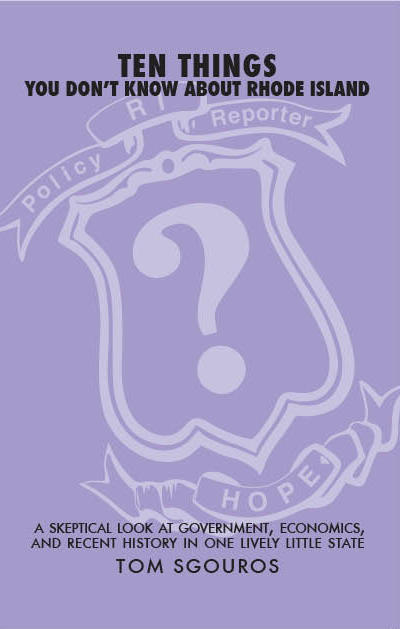
What's this? A Book!
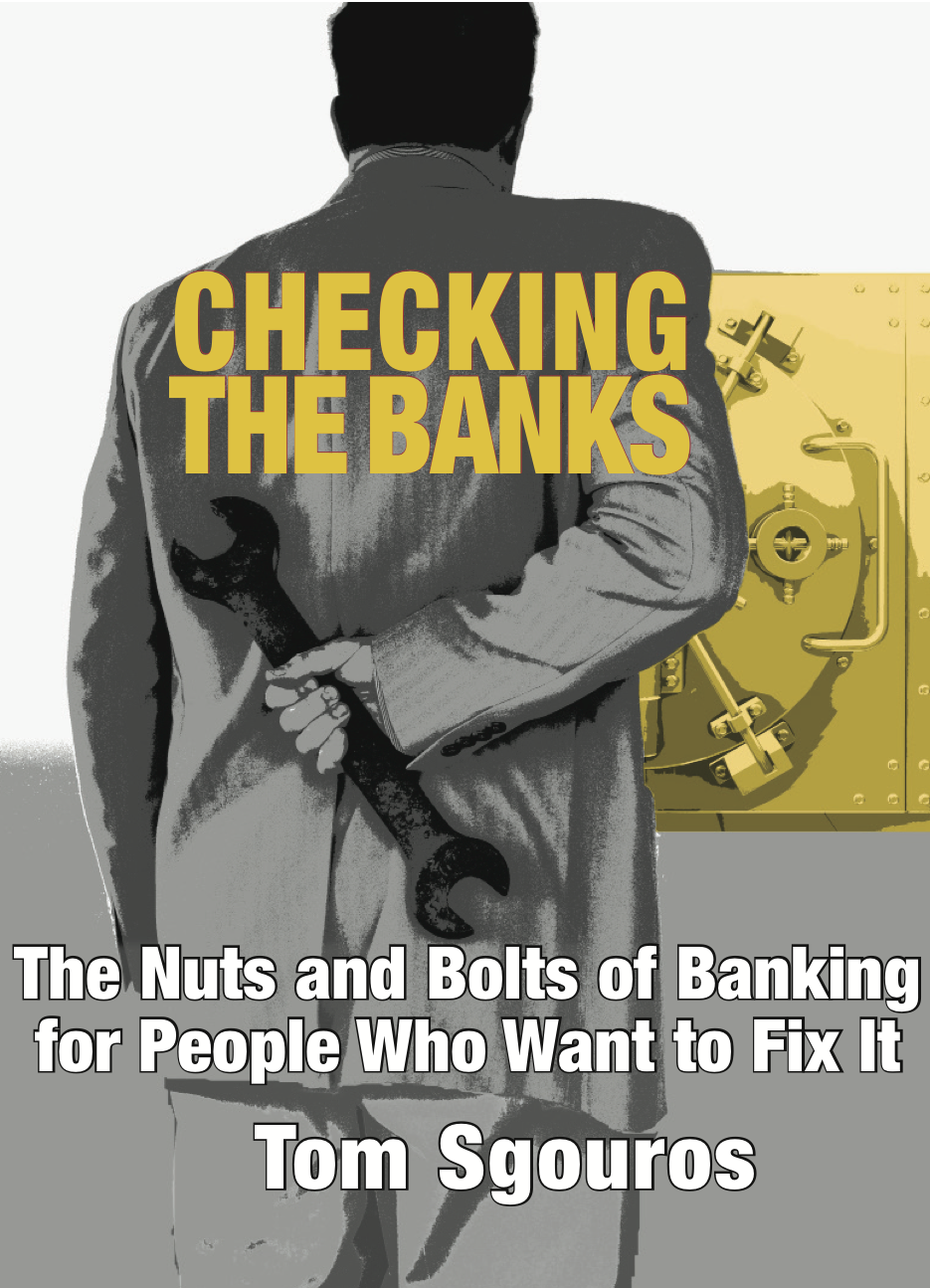
Or buy here: Light Publications, Powell's, or Bn, Amazon

A look at the lousy situation Rhode Island is in, how we got here, and how we might be able to get out.

Featuring
Budget Demystification!
Fiscal Derring-Do!
Economic Jiggery-Pokery!

Now at bookstores near you, or buy it with the button above ($14, or $18 with shipping and sales tax).

Contact information below if you'd like to schedule a book-related event, like a possibly entertaining talk on the book's subjects, featuring the famous mystery graph.


Join the RIPR Mailing List! For a weekly column and (a few) other items of interest, click here or send an email to ripr-list-subscribe@whatcheer.net.

RIPR is a (paper) newsletter and a weekly column appearing in ten of Rhode Island's finer newspapers. The goal is to look at local, state and federal policy issues that affect life here in the Ocean State, concentrating on action, not intentions or talk.

If you'd like to help, please contribute an item, suggest an issue topic, or buy a subscription. If you can, buy two or three (subscribe here).

Search this site

whole site RIPR back issues

Available Back Issues:

  • Aug 09 (38) - How your government's economic policies have worked against you. What a fake nineteenth century nun can teach us about the tea party protests.
  • Jun 09 (37) - Statistics of optimism, the real cost of your government. Judith Reilly on renewable tax credits. Review of Akerlof and Shiller on behavioral economics.
  • Apr 09 (36) - Cap and trade, the truth behind the card check controversy, review of Governor's tax policy workgroup final report.
  • Feb 09 (35) - The many varieties of market failures, and what classic economics has to say about them, review of Nixonland by Rick Perlstein.
  • Dec 08 (34) - Can "Housing First" end homelessness? The perils of TIF. Review of You Can't Be President by John MacArthur.
  • Oct 08 (33) - Wage stagnation, financial innovation and deregulation: creating the financial crisis, the political rhetoric of the Medicaid waiver.
  • Jul 08 (32) - Where has the money gone? Could suburban sprawl be part of our fiscal problem? Review of Bad Money by Kevin Phillips, news trivia or trivial news.
  • Apr 08 (31) - Understanding homelessness in RI, by Eric Hirsch, market segmentation and the housing market, the economics of irrationality.
  • Feb 08 (30) - IRS migration data, and what it says about RI, a close look at "entitlements", historic credit taxonomy, an investment banking sub-primer.
  • Dec 07 (29) - A look at the state's underinsured, economic geography with IRS data.
  • Oct 07 (28) - Choosing the most expensive ways to fight crime, bait and switch tax cuts, review of Against Prediction, about the perils of using statistics to fight crime.
  • Aug 07 (27) - Sub-prime mortgages fall heaviest on some neighborhoods, biotech patents in decline, no photo IDs for voting, review of Al Gore's Against Reason
  • Jun 07 (26) - Education funding, budget secrecy, book review of Boomsday and the Social Security Trustees' Report
  • May 07 (25) - Municipal finance: could citizen mobility cause high property taxes? What some Depression-era economists had to say on investment, and why it's relevant today, again.
  • Mar 07 (24) - The state budget disaster and how we got here. Structural deficit, health care, borrowing, unfunded liabilities, the works.
  • Jan 07 (23) - The impact of real estate speculation on housing prices, reshaping the electoral college. Book review of Blocking the Courthouse Door on tort "reform."
  • Dec 06 (22) - State deficit: What's so responsible about this? DOT bonding madness, Quonset, again, Massachusetts budget comparison.
  • Oct 06 (21) - Book review: Out of Iraq by Geo. McGovern and William Polk, New rules about supervisors undercut unions, New Hampshire comparisons, and November referenda guide.
  • Aug 06 (20) - Measuring teacher quality, anti-planning referenda and the conspiracy to promote them, affordable housing in the suburbs, union elections v. card checks.
  • Jun 06 (19) - Education report, Do tax cut really shrink government?, Casinos and constitutions, State historic tax credit: who uses it.
  • May 06 (18) - Distribution analysis of property taxes by town, critique of RIEDC statistics, how to reform health care, and how not to.
  • Mar 06 (17) - Critique of commonly used statistics: RI/MA rich people disparity, median income, etc. Our economic dependence on high health care spending. Review of Crashing the Gate
  • Feb 06 (16) - Unnecessary accounting changes mean disaster ahead for state and towns, reforming property tax assessment, random state budget notes.
  • Jan 06 (15) - Educational equity, estimating the amount of real estate speculation in Rhode Island, interview with Thom Deller, Providence's chief planner.
  • Nov 05 (14) - The distribution of affordable houses and people who need them, a look at RI's affordable housing laws.
  • Sep 05 (13) - A solution to pension strife, review of J.K. Galbraith biography and why we should care.
  • Jul 05 (12) - Kelo v. New London: Eminent Domain, and what's between the lines in New London.
  • Jun 05 (11) - Teacher salaries, Veterinarian salaries and the minimum wage. Book review: Confessions of an Economic Hit Man
  • Apr 05 (10) - Choosing a crisis: Tax fairness and school funding, suggestions for reform. Book review: business location and tax incentives.
  • Feb 05 (9) - State and teacher pension costs kept artificially high. Miscellaneous tax suggestions for balancing the state budget.
  • Dec 04 (8) - Welfare applications and the iconography of welfare department logos. The reality of the Social Security trust fund.
  • Oct 04 (7) - RIPTA and DOT, who's really in crisis?
  • Aug 04 (6) - MTBE and well pollution, Mathematical problems with property taxes
  • May 04 (5) - A look at food-safety issues: mad cows, genetic engineering, disappearing farmland.
  • Mar 04 (4) - FY05 RI State Budget Critique.
  • Feb 04 (3) - A close look at the Blue Cross of RI annual statement.
  • Oct 03 (2) - Taxing matters, a historical overview of tax burdens in Rhode Island
  • Oct 03 Appendix - Methodology notes and sources for October issue
  • Apr 03 (1) - FY04 RI State Budget critique
Issues are issued in paper. They are archived irregularly here.

Subscription information:

  • 11 issues/year more or less
  • $35/11 issues, $20/6 issues
  • send check or small bills to:

    Rhode Island Policy Reporter
    Box 23011
    Providence, RI 02903

  • Pay online here

Contact:

For those of you who can read english and understand it, the following is an email address you are welcome to use. If you are a web bot, we hope you can't understand it, and that's the point of writing it this way.

editor at whatcheer dot net

Archive:

2007 print columns 2008 print columns Deep archive

Links:

Links page

RSS

RIPR is primarily a print publication (yikes! how 20th century!), and the work it represents is supported by its subscribers. Feel free to use this link to an RSS feed for the blog, but the real meat is in the newsletter, so come back and subscribe when you have a chance.

Responsibility:

Creative Commons License Tom Sgouros

Tue, 09 Mar 2010

The Opposite of Stimulus

Much has been made nationally of the Obama administration's stimulus package and efforts to turn around one of the weakest economies we have seen in decades. But in Rhode Island, our politicians have enacted counterproductive measures that have only harmed Rhode Island families and small businesses and continue to hold us back. It is not too late to turn around these policy decisions and take decisive action to put working Rhode Islanders first, but it will require stronger voices than we have seen at the Statehouse in recent years.

The problem is that state leaders have seen only one path to economic development: increase investment. This has led them to promote tax cuts for the rich, among them the "flat" tax. In order to pay for those tax cuts, the state government has absorbed some of the Obama stimulus money that should have gone to cities and towns, and to schools. Property taxes have been increased, leaving thousands of working families with even less money to spend. We've laid off municipal workers and teachers, and made cuts in education, Medicaid, and other services used by ordinary Rhode Islanders.

These policies send a clear signal that our leaders in the statehouse, notwithstanding rhetoric to the contrary, have not really been helping working families in Rhode Island. Rather, they've used the stimulus money to make up for foolhardy tax cuts for the wealthy -- tax cuts that will not in any way help our economy but will certainly help the corporate and monied interests who unduly influence too many elected officials.

But won't investment help? The idea that a lack of investment is limiting our state's economy is just not supportable. If anything, our state suffers from too much investment. We are still feeling the effects of a collapse of a speculative bubble in housing. How do you have a speculative bubble without investment? Rhode Island's problem is not a lack of funds to invest, but a shortage of productive places to invest them in.

What's more, a strategy of investment is inadequate given the scale of the problem. In its most recent annual report, the Economic Development Corporation boasts their $1.6 million loan fund has created 63 jobs and protected 396. That's great, but there are over 70,000 unemployed people in our state. What do we tell the rest?

See more ...

16:20 - 09 Mar 2010 [/y10/ma] link

Tue, 02 Mar 2010

Strong consumer protection needed

Congress is choosing now between a wishy-washy do-nothing bill that pretends to do financial reform and consumer protection on financial matters, and a much stronger bill that actually has teeth and an independent Consumer Financial Protection Agency (CFPA). Read my letter to Jack Reed about the choice here.

17:04 - 02 Mar 2010 [/y10/ma] link

Wed, 03 Feb 2010

Running for Treasurer

Readers here might be interested to know that Tom Sgouros, the editor of this site, is running for the Democratic nomination for General Treasurer in 2010. See a story or the official website: tomfortreasurer.com.

10:35 - 03 Feb 2010 [/y9/de] link

Fri, 11 Dec 2009

Do banks help?

Banks are in the news again, and not really for the best of reasons. Congress is just getting rolling on debating the reform of financial regulation, and we're hearing a lot about, well, unhelpful banking practices.

"Overdraft protection" for example. This is a system where the bank will honor a check that might overdraw your account, but charge you a stiff fee for the privilege. You can appreciate the beauty of this scheme with an account holding $300 and two checks, one for $400, and one for $15. Without overdraft protection, one would bounce and you'd be dinged for that one, but the other would clear no problem. With overdraft protection, the bank can charge you for both checks, because the first one makes the account balance negative, and the second makes it worse. In essence the bank is giving you a small loan, at potentially astronomical rates. Peter Wasylyk, a Rhode Island attorney, is currently trying to organize a class-action suit against big banks for this practice. (He's also a state representative from Providence.)

What else? It was reported in the Providence Journal a couple of weeks back that local banks are not participating in a part of the federal stimulus package meant for them. This provision was meant to provide very low interest loans or credit lines to area small businesses. As of the end of November, only 13 Rhode Island businesses had received loans, from only four banks. Most of the other banks complained of too much paperwork, or simply ignored the program.

And, of course, we can't forget the enormous executive bonuses paid by the big banks (including BankAmerica) straight out of federal bailout money.

But why are they doing these things? It's not because they're evil, but because they feel pushed into it. Banks are an essential part of our market economy. We can't do without them. Ben Bernanke (and many others) call credit the lifeblood of the American economy. But banks are also economic actors. They have to attract good talent, they have to have their loans repaid, and they have to earn money. The problem we all face is that there are lots of ways to do these things, and only some of them are good for the rest of us. For example, a bank could make money by getting its branch security guards to confiscate the wallets of its customers. Presumably a bank that did this would start losing customers -- unless all the other banks were doing the same thing.

See more ...

17:43 - 11 Dec 2009 [/y9/cols] link

Tue, 08 Dec 2009

Banks behaving badly

It seems local banks don't seem able to participate in an important part of the stimulus package. Read here.

01:03 - 08 Dec 2009 [/y9/de] link

When it works...

I've lately been reading "Ground Truth" by John Farmer. It's a blow-by-blow account of the events of September 11, 2001, informed by a few bushels of recently declassified documents -- documents that either weren't available to the official 9/11 commission or they chose not to use. Farmer was counsel to that commission, so he was in a position to know what evidence was available.

What I am learning from the book is alternately depressing and enraging. Incompatible equipment and rules made interagency cooperation impossible. (And some of the "fixes" made in the aftermath have only made the situation worse.) Opportunities to capture or thwart the hijackers were ruined by bureaucratic turf warfare, poor planning, bad equipment and plans created for a cold war that was over.

Plus, most of the agencies involved lied about it after and classified the evidence of their performance, effectively thwarting any attempt to fix the problems in a rational way.

Now, I've worked in enough large corporations to know that these kinds of inefficiencies are endemic to all kinds of large organizations, not just government. I recall one company I consulted for that laid off several people from a profitable division primarily because there was a hiring freeze and they couldn't replace a business development guy who had left. Then there was the company that laid off every single engineer who worked there in order to outsource everything (key quote from the CEO: "If your job involves actually doing something, your job is at risk"). I was at another where the two chief engineers created incompatible software largely because they really didn't like each other. (One of these companies is still around and supposedly thriving.)

That said, if you yearn for good government, it's of very little comfort to know that private companies are often just as bad. So I figured this week it would be good to share some pleasant news about your state government, so you can have something to be thankful for.

See more ...

01:01 - 08 Dec 2009 [/y9/cols] link

Sat, 21 Nov 2009

Fixing banks -- Will it work?

I'm not really sure anyone remembers this, but we had a bit of a financial crisis last fall. Remember that? Banks too big to fail, but they failed anyway? Financial armageddon avoided via all-weekend meetings in New York and DC. Sunday evening announcements about who'd get billion-dollar bailouts the next day? Good times, those.

What's funny about it is that though we bailed out the banks, we didn't create any way to prevent banks and hedge fund operators from doing the exact same thing all over again. We added some conditions to some of the bailout money. Some of these have been honored in the breach, with executives at several bailed-out banks and investment companies awarding themselves a few billion dollar's worth of bonuses.

So it's with a mixture of pleasure and anxiety that I read that financial reform bills are making their way through both the House and the Senate. If congressional battles over health care reform ever get off the front pages, you'll be reading about attempts to reassemble a regulatory apparatus to protect our financial system from its excesses. That is, a year after the colossal bailouts of last fall, it's finally time to expend some effort to make sure they don't have to happen again.

Last week saw the presentation of an ambitious bill by Senator Christopher Dodd (D-CT), providing a kind of counterpoint to a House bill to do more or less the same, championed by Rep. Barney Frank (D-MA). The bills differ in important details, and both are fairly complex pieces of legislation. I'm optimistic that at last some of these issues are being discussed, but anxious because it doesn't seem to me that the solutions on the table are likely to be effective.

See more ...

12:56 - 21 Nov 2009 [/y9/cols] link

Wed, 18 Nov 2009

Letter from the Mayors

In my mailbox this morning. They're exactly right.

The one quibble I have is that there's nothing wrong with binding arbitration. The binding arbitration rules in, for example, Connecticut are quite clear about what are the proper reasons an arbitrator can use to rule one way or the other in a dispute. It's possible to draw those rules to favor unions, and it's possible to draw them to favor management. We should adopt binding arbitration, and then argue about what are the proper grounds for a ruling, but that's a far smarter course than just throwing the whole idea out the window.

Coalition of RI mayors: Best medicine for RI is smart state funding policy

Prescribing a "crash diet" to 39 people you have never met will make some more healthy, make others sick and will kill a handful. Doctors don't prescribe in this way, for obvious reasons. Instead, they base their recommendations on detailed individual histories and a strong understanding of the symptoms. They know who they're dealing with, they see what's wrong and they follow the best practices for fixing the problem.

Everyone knows that Rhode Island's economy is not well. Recently, we have seen signs of courageous and incisive state and municipal leadership, for instance, on education and pension reform. However, when it comes to overall state funding policy, many elected officials - including the governor - are still prescribing a blanket crash diet for Rhode Island's 39 cities and towns. This is not a way to lead our state back to fiscal health. Rhode Island's 39 municipalities have dramatically different fiscal profiles. Only by taking a detailed history can we understand how they got this way and how we might go about fixing it. A history of poor fiscal management in some of our municipalities has resulted in wild deviations between similar communities: some have lifetime Blue Cross insurance for teachers and their spouses while others do not; some have as much as 50 percent more police officers per capita than others; some have millions of dollars more in pension liabilities than others.

See more ...

08:19 - 18 Nov 2009 [/y9/no] link

Sat, 14 Nov 2009

Are they serious?

Last week, Congress finally passed an extension to unemployment benefits, after about five weeks of debate in the Senate. The final vote in the Senate was 98-0, but the bill had to overcome three Republican filibusters along the way. In other words, zero Republican Senators were brave enough to vote against the bill, but dozens cooperated in delaying and stalling it.

In other Congressional news last week, Republicans in the House trumpeted a new bill to be their version of health care reform. It's an assemblage of some old ideas: limits on malpractice lawsuits, eliminating barriers to interstate competition in health insurance, promoting healthier lifestyles, and creating "risk pools" where people who have been denied coverage for pre-existing conditions can have a second try.

The problem, of course, is that few of these ideas have anything like evidence in their favor, even if some of them sound plausible. There are states with lots of insurance competition, states with lots of joggers, and also states with strict limits on malpractice lawsuits, and you know what? Medical costs routinely drive people into bankruptcy in those states, too. Essentially, this plan is good for healthy people who already have insurance, but no one else.

The Congressional Budget Office agrees with me. They scored it, as they have scored all the Democratic plans, and according to their score, the plan would be more expensive, and cover fewer people than the Democratic plan it's meant to "improve" upon. According to the CBO, about 17% of Americans don't have coverage, and after ten years of the Republican plan, they predict that about 17% of Americans still won't be covered.

The CBO report essentially tells us that the Republicans are not serious about solving this problem, just as the legislative shenanigans in the Senate showed us they are not serious about providing unemployment benefits to people who need them. These are serious problems. Our economy, our government and our families are being devastated by a health care crisis brought on by decades of spiraling prices. We also face two wars, a maimed economy and the prospect of drowning our coastal cities before the century is out.

Really, "serious" hardly begins to describe it, but in the face of all that, we have a minority party on the national level that seems utterly uninterested in anything except maneuvering for partisan advantage. (Abetted, of course, by a small number of Democratic senators and representatives who imagine that "centrism" is a higher good than addressing actual problems.) This is simply not a serious way to govern.

See more ...

16:00 - 14 Nov 2009 [/y9/cols] link

Fri, 06 Nov 2009

Too much forgetting allowed

In 1660, Mary Dyer was hanged on Boston Common. Her crime? Being a Quaker. Her execution was part of a tragic and shameful chapter in our nation's history. So why is there a statue of her in front of the Massachusetts State Capitol east wing? Proponents of removing "Providence Plantations" from our state's name might ask themselves this question.

The statue was erected in 1959, and it wasn't put there because the Massachusetts legislature approved of her execution. No, it was put there because legislators there thought it important that people remember the example of her courageous life, her devotion to freedom of conscience (she traveled back to Massachusetts in protest of the law and was executed), and the heinous laws under which she was put to death.

After all, what, is memory for? It's not just for wallowing in nostalgia; it's the way we avoid making the same mistakes over and over again.

As for ourselves, so also for our society. Our nation's history is one of mistakes made and rectified -- of lessons learned and addressed -- sometimes with statuary, and other times with court decisions, regulations and laws. Why do we regulate barbers, pharmacists, and insurance companies? Because of bad experiences we've had with head lice, quack remedies, and insurance fraud.

We sometimes forget these lessons, and guess what happens then? We get to learn them again.

See more ...

15:49 - 06 Nov 2009 [/y9/cols] link

Mon, 02 Nov 2009

Imagine

Orrin Hatch on the dreadful scenario of passing health care reform:

"And if they get there, of course, you're going to have a very rough time having a two-party system in this country, because almost everybody's going to say, 'All we ever were, all we ever are, all we ever hope to be depends on the Democratic Party,' " Hatch said during an interview with the conservative CNSNews.com.

"That's their goal," Hatch added. "That's what keeps Democrats in power."

That is, we fear a party that can actually do things that people want.

15:10 - 02 Nov 2009 [/y9/no] link

Sun, 01 Nov 2009

They really are like that

The doctrinaire libertarian pole of the health care reform debate is occupied by real, prominent, people. It may sound like a cartoon, but the people behind it seem to be serious.

19:06 - 01 Nov 2009 [/y9/no] link

Fri, 30 Oct 2009

How many towns is the right number?

After years of talk, it seems like initiatives to consolidate municipal services and schools are actually moving, slowly, but perceptibly. The legislature has convened a commission to talk about it, which is interesting, though the kind of thing that only occasionally presages real action.

On the other hand, Senator Frank Ciccone, vice-chair of the Government Oversight committee, says he's going to introduce quite a dramatic bill in January, revoking all the city and town home rule charters in the state and creating five county-wide municipal and school administrations. I'm glad he's doing this, not so much because I agree with him that such a dramatic change is a good idea, but because change will only happen when someone proposes it. His efforts are far more likely to make a positive difference in your life than the commission's.

There are two reasons widely cited for consolidation. Actually, that's not quite true. There's one widely cited, but pretty questionable reason, and another seldom cited, but likely very important reason. They lead to very different conclusions about what needs doing, and I don't expect the commission to reach those conclusions.

See more ...

21:02 - 30 Oct 2009 [/y9/cols] link

Press!

Coverage of the book... Brown Daily Herald.

13:21 - 30 Oct 2009 [/y9/oc] link

Another take on binding arbitration

Read here

The rank and file rejection of the first contract proposal was a huge setback for school reform in Providence. It weakened the administration, helped trigger a decade long cycle of revolving door superintendencies, divided the union, and as the final contract included both a bigger pay raise and fewer concessions in work rules, reinforced the idea that intransigence by the union would be rewarded. Also, the entire conflict triggered a long period of "work to rule" right as a whole range of promising reform initiatives were ramping up.

If Rhode Island had binding arbitration in 2000, everything would have been different. No work to rule, and the orderly adoption of a contract that would have probably closely resembled the original agreement between administration and union leadership. This would have been followed by two more contracts that progressed in an orderly way toward more reasonable work rules, and we'd be working on the fourth in that series right now.

Contrary to conventional wisdom, a look at recent history confirms that binding arbitration would be good for school reform in Rhode Island.

13:04 - 30 Oct 2009 [/y9/oc] link

Fri, 23 Oct 2009

Why are people still losing their homes?

Reports out this month tell us that the foreclosure crisis facing our nation has not even peaked yet. Nationally, one property in every 136 were in some kind of foreclosure proceeding in July, August or September -- 937,840 properties. According to RealtyTrac, a private concern tracking them, foreclosures are up 5% from the spring quarter, and 23% from the same time last year.

The hardest hit places in the country are the places that have boomed the fastest over the past decade: Nevada leads the list with one foreclosed property for every 23. Arizona and California aren't far behind, with 53 in both.

To my great relief, our state appears to be bucking this trend, and foreclosures seem to be declining slightly in Rhode Island. We've seen the rate decline 6.3% since the spring, and about 2.75% since the same time last year. The rate here is still nothing to brag about: one foreclosure for every 290 properties, still high enough to be devastating to many neighborhoods.

In fact, the whole list is dismal, except way down on the bottom, one bright spot: Vermont. Last quarter, while Rhode Island was seeing 1,554 foreclosures, Vermont saw 62. This comes out to about one foreclosure for every 5,023 properties.

See more ...

21:55 - 23 Oct 2009 [/y9/cols] link

Fri, 16 Oct 2009

Book signing!

This coming Friday, October 23, I will give a talk and sign some books at Westerly's Other Tiger bookstore, 90 High Street, Westerly, from 5-7pm. Please come, and more important, tell anyone you know in Westerly. I don't know enough people there, so any help is welcome.

Also, I was on Channel 36's Lively Experiment last night. They re-broadcast it on Sunday at noon, so look for it this Sunday.

18:55 - 16 Oct 2009 [/y9/oc] link

Ads and the like:

RIPR, subscriptions

Cost of the War in Iraq
(JavaScript Error)
To see more details, click here.
Rhode Island 101
(A funny book you should own)